

Translation is crucial in our globalized world. With advanced technology, language barriers are easier to overcome.
Large Language Models (LLMs) have become game changers in translation. They translate text with impressive accuracy and speed. But which LLM is best for translation? This question is vital for businesses, travelers, and anyone needing reliable translation tools.
Understanding the top LLMs can help you communicate more effectively. In this blog post, we’ll explore the best LLMs for translation. We’ll examine their strengths, features, and why they stand out. This guide will help you choose the best model for your translation needs.
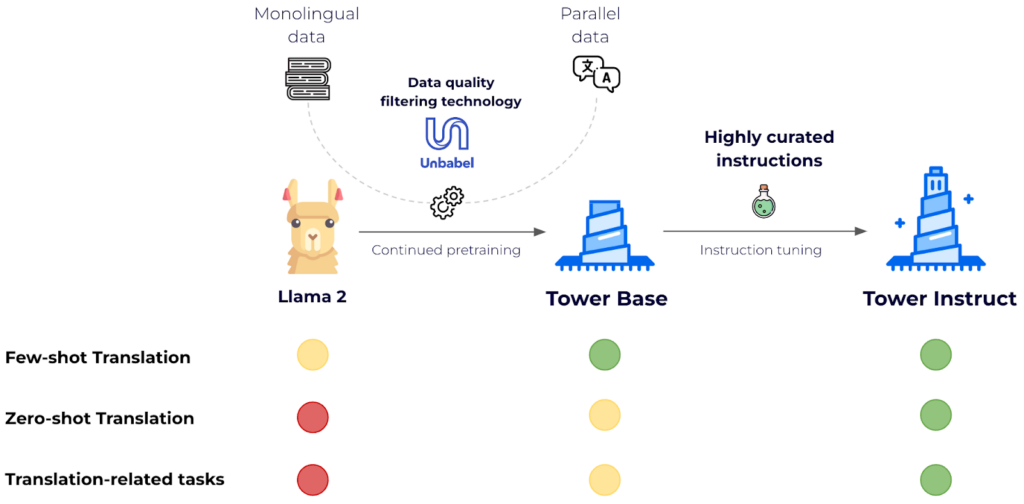
Credit: unbabel.com
Introduction To Llms For Translation
Translation has always been a vital tool for communication across different languages. With the advent of large language models (LLMs), translation has reached new heights, becoming faster and more accurate. Let’s explore the importance of translation models and how LLMs have evolved over time.
Importance Of Translation Models
Imagine traveling to a foreign country and instantly understanding the local language. Translation models make this dream a reality. They break down language barriers and help you communicate effortlessly.
Businesses benefit tremendously from translation models. They can reach global markets and cater to diverse audiences. Accurate translations can lead to better customer satisfaction and increased sales.
But it’s not just about business. Translation models also aid in academic research, allowing scholars to access information in different languages. This opens up a world of knowledge and collaboration.
Evolution Of Llms
LLMs have come a long way from simple word-to-word translations. Early models often missed context, leading to confusing outputs. But now, LLMs use advanced algorithms to accurately understand and translate entire sentences.
The introduction of neural networks marked a significant leap in LLMs. These networks mimic the human brain, learning from vast datasets. As a result, translations became more nuanced and context-aware.
Today, LLMs can even handle idiomatic expressions and slang. This makes translations sound natural and fluent, almost as if a native speaker did them.
Have you ever used an LLM for translation? How did it improve your experience? Share your thoughts in the comments below!
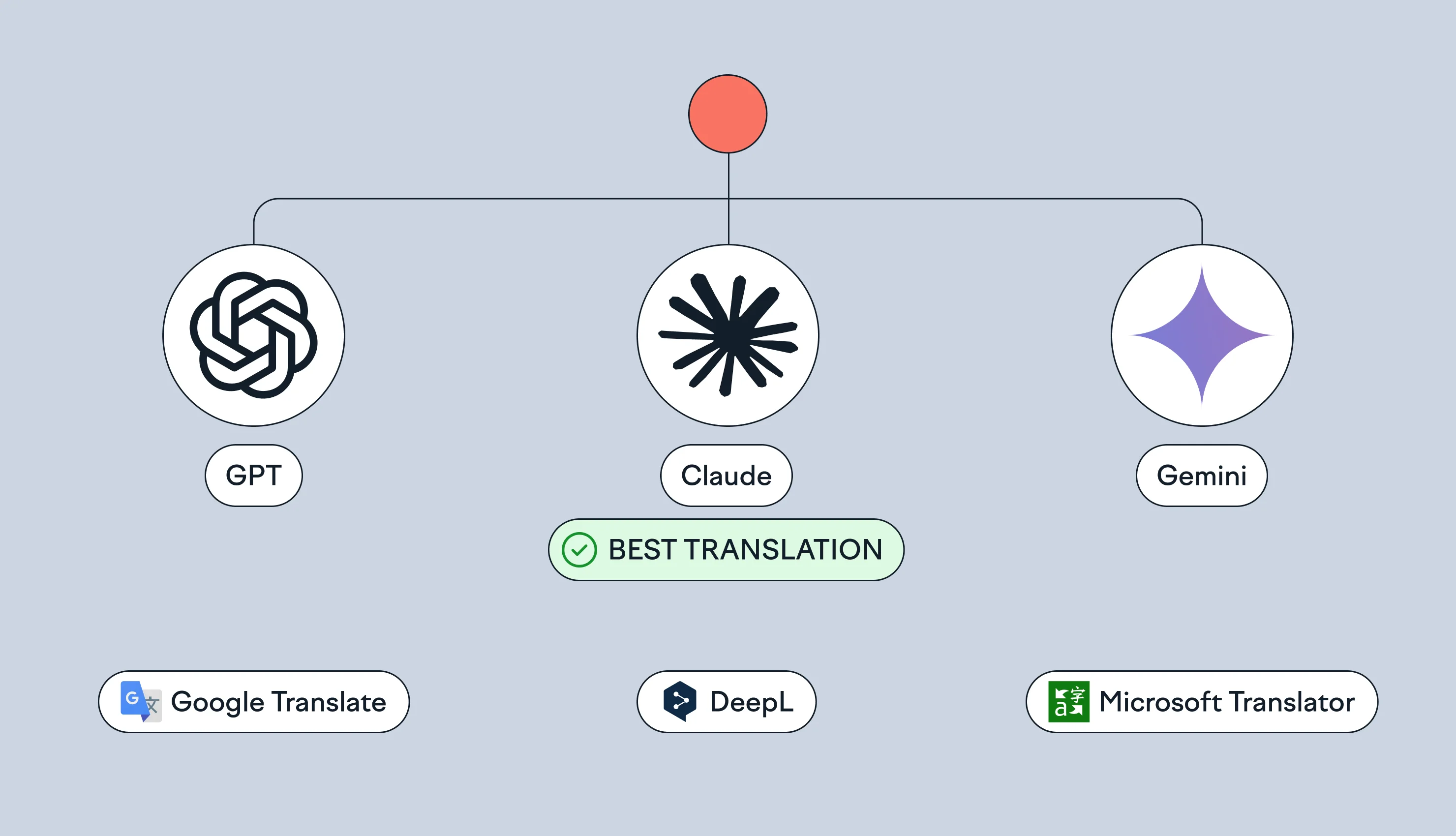
Credit: lokalise.com
Key Features Of Top Translation Models
Top translation models excel in accuracy and speed. They handle complex sentences with ease, ensuring context is maintained. Their ability to learn from vast datasets makes translations more natural and reliable.
When looking for the best language model (LLM) for translation, you want to know what sets the top models apart. Understanding the key features will help you make an informed decision. Let’s dive into the essential attributes of the leading translation models.
Accuracy And Precision
The accuracy and precision of a translation model are paramount. You want a model that delivers translations you can trust. Misunderstandings or errors can lead to significant miscommunication.
I once used a model that mistranslated medical terms, causing confusion. Since then, I have always looked for models with high accuracy ratings. This ensures that your translations are reliable and precise.
Language Pair Coverage
The best translation models offer extensive language pair coverage, which means they can translate between a wide range of languages. Comprehensive language support is crucial, whether you need to translate from English to Spanish or from Mandarin to French.
Imagine needing to translate a document for a business meeting in Japan and finding out your model doesn’t support Japanese. That would be a disaster. Thus, always check the language pairs available.
Contextual Understanding
Contextual understanding is another critical feature. A good translation model doesn’t just translate words—it understands context. This ensures that idioms, slang, and cultural nuances are accurately conveyed.
I once read a translated article in which “kick the bucket” was translated literally. It was hilarious but incorrect. A model with strong contextual understanding avoids such blunders and ensures your translations are meaningful and culturally appropriate.
In your quest for the perfect translation model, consider these key features. They can make a world of difference in the quality and reliability of your translations. What features do you find most important in a translation model?
Top Llms In The Market
Choosing the best Language Learning Model (LLM) for translation can be challenging. There are many options available. This section highlights the top LLMs in the market. These models have proven their worth in translation. Let’s dive into what makes them stand out.
Google Translate is one of the most popular tools. It supports over 100 languages. The interface is simple and user-friendly. You get quick translations with decent accuracy. It’s great for casual use or travel.
DeepL Translator offers high-quality translations. It uses advanced algorithms to ensure precision. DeepL supports fewer languages than Google Translate, but its translations often feel more natural. It is great for professional or detailed work.
Microsoft Translator is another robust option. It supports many languages and is integrated with other Microsoft products, making it easy to use in different applications. Accuracy and ease of use are its strong points.
1. Google Translate
Google Translate is a widely used translation tool. It supports many languages and offers quick translations, so many people rely on it for their everyday translation needs. But how good is it really? Let’s take a closer look.
Strengths And Weaknesses
Google Translate has several strengths. First, it covers over 100 languages, making it versatile. Second, it uses machine learning, which means it gets better over time. Third, it is free to use, making it accessible to everyone.
But it has weaknesses, too. The translations are not always perfect, and this is more noticeable with complex sentences. Sometimes, the context is lost. Also, the quality can vary between languages. Some languages are more accurate than others.
Best Use Cases
Google Translate works well for casual conversations, traveling, and translating short texts, such as social media posts or emails. It also helps with basic phrases and directions.
It can also help with learning a new language. You can use it to practice vocabulary. It is also helpful in understanding simple web pages. Just be cautious with essential documents. For these, a professional translator might be better.
2. Deepl Translator
DeepL Translator excels in translating languages with high accuracy. Its advanced algorithms make it the best LLM for translation tasks. Users appreciate its user-friendly interface and quick results.
DeepL Translator has gained significant attention in the realm of translation due to its high-quality output and user-friendly interface. Developed by the DeepL company, this tool has impressed many with its ability to provide accurate translations that maintain the context and nuances of the original text. Whether you are a professional translator, a student, or simply someone needing quick translations, DeepL Translator has something valuable to offer.
Strengths And Weaknesses
DeepL Translator excels at producing translations that feel natural and fluent. It often outperforms other translation tools in maintaining the original context and subtleties of the text, particularly in complex sentences and idiomatic expressions.
However, it is not without its limitations. One notable weakness is the limited number of languages it supports compared to some other translation tools. While it covers major languages, it may not be the best choice if you need translations for less common languages.
The interface is also straightforward to use. Yet, some users might find the lack of advanced customization options a drawback. If you need specific translation adjustments, DeepL might lack them.
Best Use Cases
DeepL Translator excels in professional settings where accuracy and nuance are crucial. Its precision can be invaluable if you are translating legal documents or technical manuals.
It’s also an excellent tool for students. Imagine you have a foreign language assignment and must ensure your translations are spot-on. DeepL can help you understand the context better and improve your learning experience.
For casual users, DeepL is perfect for translating emails, social media posts, or web content. If you are traveling and need to communicate in a different language, DeepL’s mobile app can be a lifesaver.
Consider this: Have you ever struggled with a translation tool that doesn’t get the meaning right? With DeepL, you are more likely to get a translation that feels like a human, not a machine, wrote it.
How do you think this could impact your daily tasks or projects? Give DeepL a try and see how it meets your needs.
3. Microsoft Translator
Microsoft Translator is a robust language translation tool that uses advanced AI to provide accurate translations across numerous languages. Trusted by many, it offers real-time translation and supports both text and speech.
Strengths And Weaknesses
Microsoft Translator has many strengths. Its seamless integration with Microsoft products, including Word, Excel, and Teams, makes it easy for users to switch between applications.
Another strength is its real-time translation feature. It supports text and speech translation. This is useful for live conversations and meetings.
One weakness is the occasional inaccuracy in complex sentences. It struggles with idiomatic expressions and nuanced context. This can lead to minor errors in translation.
Another limitation is its dependency on internet connectivity. Offline translations are not as accurate. This can be inconvenient in areas with poor internet.
Best Use Cases
Microsoft Translator is great for business meetings. It helps in communicating with international clients. The real-time speech translation is particularly useful.
Travelers also benefit from this tool. It helps them navigate foreign countries, and translating signs, menus, and conversations becomes easier.
Students can use Microsoft Translator to learn new languages. It aids in understanding foreign texts and improving language skills, and the app’s educational features are a bonus.
Another use case is customer support. Companies can efficiently assist non-English-speaking customers, improving customer satisfaction and support quality.
Choosing The Right Model For Your Needs
Selecting the best LLM for translation involves evaluating accuracy and language support. Consider models known for handling multiple languages effectively. Prioritize those with high translation quality and user-friendly interfaces.
Selecting the best large language model (LLM) for translation can be challenging. Each model has unique strengths, and your choice will depend on several factors. Let’s explore these in detail.
Factors To Consider
First, consider the languages you need to translate. Not all models support every language. Some excel in European languages, while others may be better for Asian languages.
Next, think about accuracy. Accuracy is key in translation. Check reviews and user feedback. High accuracy means fewer errors.
Speed is another important factor. Faster models can handle more translations, which is crucial for businesses with high-volume needs.
User-friendliness also matters. Some models are easier to use, with simple interfaces and good support. This can save time and reduce frustration.
User Case Scenarios
Businesses often need fast, accurate translations. To this end, they may choose models that support many languages, which helps them reach more customers.
Students might need translations to learn. They may prefer models that focus on accuracy, which helps them understand better.
Travelers need quick translations on the go, so they might choose models with mobile support. This makes it easy to get translations anywhere.
Researchers require detailed and precise translations as well as models that handle complex texts. Accuracy and context are crucial here.
Each user has different needs. Knowing your own needs helps you make the right choice.
“`
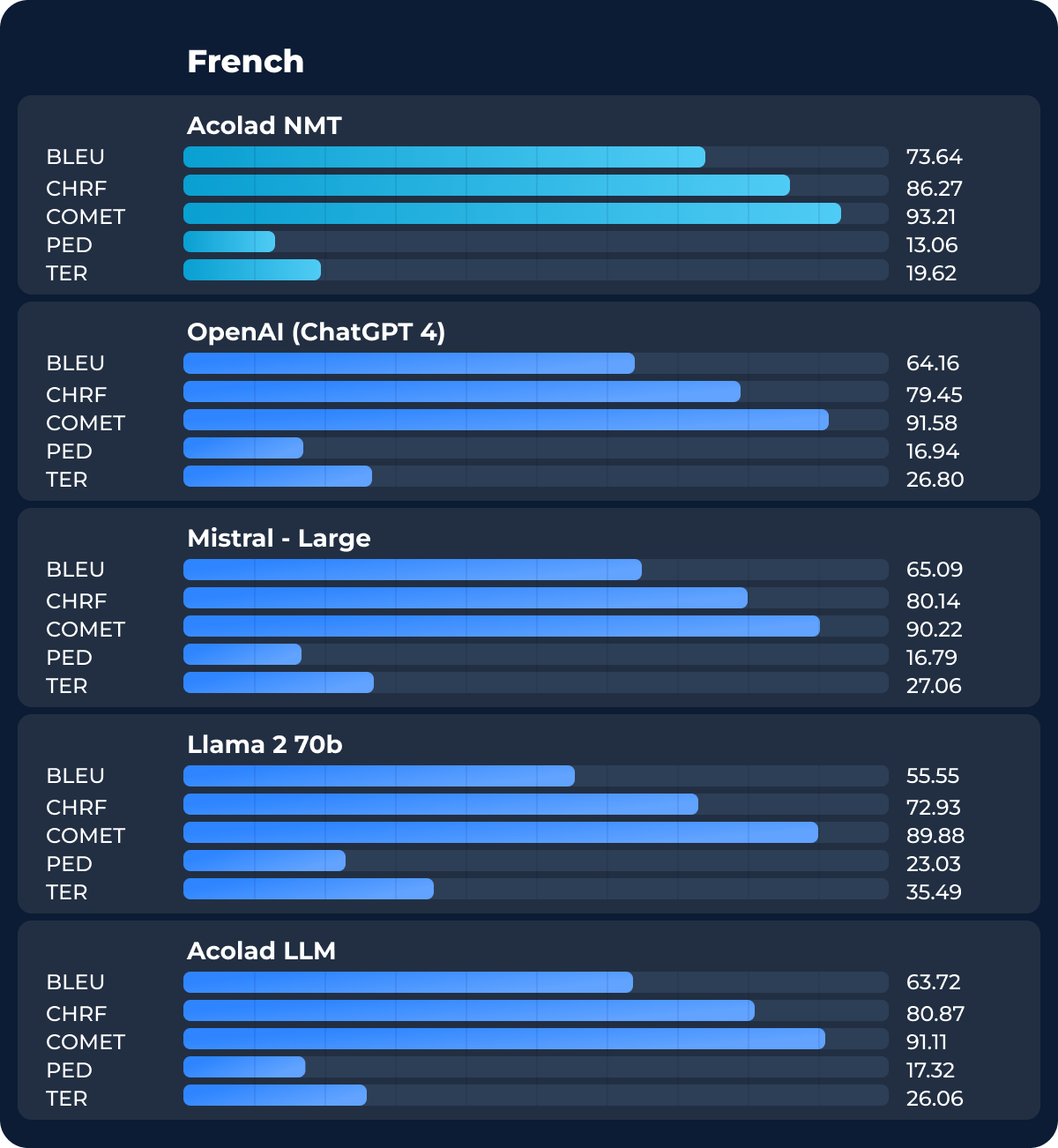
Credit: www.acolad.com
Future Of Llms In Translation
Large Language Models (LLMs) have taken the tech world by storm, and their impact on translation is particularly noteworthy. These AI-driven models are not just making translation faster but also more accurate. As we look ahead, the future of LLMs in translation promises even more exciting advancements and some unique challenges.
Technological Advancements
LLMs are becoming more sophisticated with each iteration. They now understand context better, making translations more nuanced and accurate. Imagine translating idioms or cultural references without losing their original meaning – LLMs are getting closer to achieving this.
Real-time translation is another area where LLMs are making strides. You can now have live conversations with people who speak different languages without a hitch. This can be a game-changer for global business meetings and travel.
Personalization is on the horizon, too. Soon, LLMs will adapt to your unique way of speaking and writing, making translations more tailored and relevant. This could be incredibly useful for content creators and professionals alike.
Potential Challenges
Despite these advancements, there are hurdles to overcome. Translation accuracy is still a major concern, especially with less common languages. Misinterpretations can lead to misunderstandings, which can be costly in business and personal interactions.
Ethical considerations also come into play. How do we ensure that these models are free from biases? As LLMs learn from vast datasets, they can inadvertently pick up and propagate stereotypes. This is an area that needs constant vigilance.
Privacy is another issue. As LLMs become more integrated into our daily lives, the data they collect could be misused. Ensuring that user data is protected and used responsibly is critical for the future of these technologies.
What are your thoughts on the future of LLMs in translation? Are you excited or concerned about these developments? Share your experiences and insights in the comments below!
Frequently Asked Questions
Which LLM Does Deepl Use?
DeepL uses its own custom-developed large language model (LLM). It is designed for high-quality translations.
Can LLM Translate Text Accurately?
Yes, LLMs can translate text accurately. They use advanced algorithms to understand and translate languages, and performance may vary by context.
What Is The Best Certification For Translation?
The best certification for translation is the ATA (American Translators Association) certification. It is widely recognized and respected in the industry.
What Is an LLM for Translation Tasks?
An LLM (Language Model) for translation tasks uses AI to translate text between languages quickly and accurately. It leverages advanced algorithms to understand context and nuances.
Conclusion
Choosing the best LLM for translation enhances communication, bridges language gaps, and allows users to translate texts with ease. Each model offers unique features, so consider your needs before selecting one. Advanced LLMs improve accuracy and context, making translations more reliable.
Experiment with different options. Find the best fit for your tasks. Efficient translations save time. They boost productivity. Investing in a good LLM benefits long-term. Explore these models today. Enjoy smoother translations tomorrow.


