
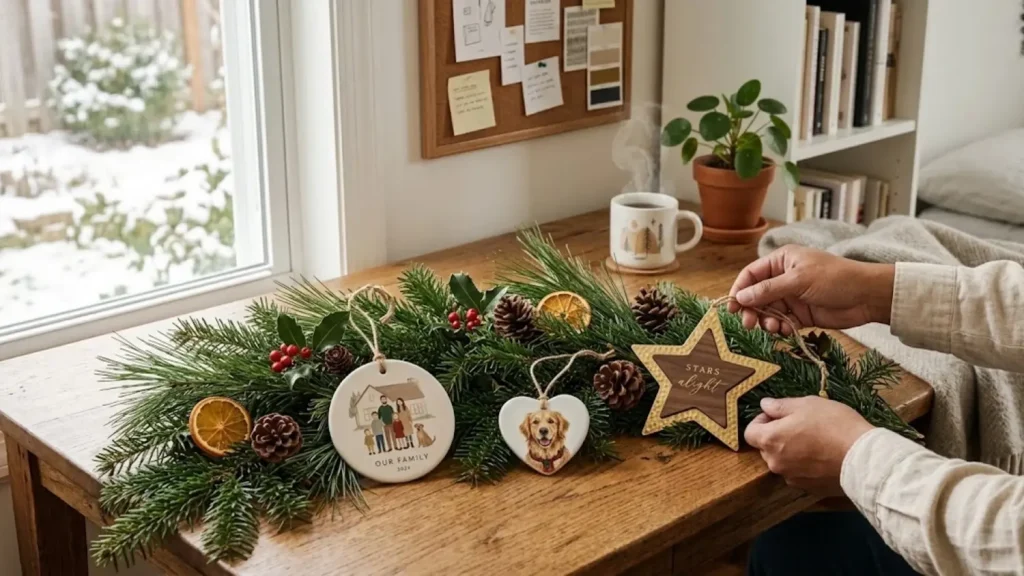
Print on demand ornaments let sellers offer customized decorative pieces without ordering large quantities of finished products in advance. Depending on the provider, options may include ceramic, metal, or other ornament styles that customers can personalize with names, dates, photographs, or original artwork.
The product’s small size makes design decisions especially important. Text must remain readable, images need to reproduce clearly, and the artwork should suit the ornament’s shape and material. A thoughtful design can turn a simple decoration into a keepsake for a family, couple, pet owner, or someone celebrating a milestone.
This guide explains the main types of print on demand ornaments, practical design ideas, material considerations, and what to check before adding them to an online store.
What Are Print on Demand Ornaments?
Print on demand ornaments are decorative items produced or customized after a customer places an order. Instead of purchasing a batch of finished ornaments and storing them, a seller works with a fulfillment provider that makes the selected product using the supplied design.
Christmas tree ornaments are a familiar example, but the category can include personalized decorations for weddings, new homes, anniversaries, family milestones, and memorials. The designs may feature names, photographs, dates, illustrations, or short messages.
Available materials, shapes, printing methods, and personalization options depend on the provider. For example, Printify’s ornament catalog includes different ornament products, while Gooten’s porcelain ornament range illustrates how a single material can be offered in multiple shapes.
If you are planning a store around customized products, this guide to starting a print on demand business explains the broader decisions involved in launching one.
Types of Print on Demand Ornaments
The material and shape influence how an ornament looks, how the design should be prepared, and which occasions it may suit. Always check the actual product specifications before creating artwork because options vary across providers.
Ceramic Ornaments
Ceramic ornaments are a traditional choice for decorative keepsakes. Their surface can suit colorful illustrations, family names, festive graphics, and photo-based designs when the provider supports the required print quality.
Designs with clear contrast can help important details stand out against the ornament’s surface. A simple family name and year, for example, may be more legible than a crowded illustration with several lines of small text.
Ceramic ornaments are worth considering for classic Christmas themes, family gifts, and commemorative designs. Check the provider’s size, finish, print area, and care instructions before publishing the listing.
Metal Ornaments
Metal ornaments can offer a different appearance from ceramic products. Depending on the finish and production method, they may suit clean typography, geometric graphics, simple illustrations, or designs built around a distinctive silhouette.
The printable surface and finish matter. A design that relies on subtle color changes or fine details may look different on metal than it does on a screen, so use the provider’s templates and previews to understand the available print area.
Other Materials and Shapes
Some providers offer additional ornament styles, which may include acrylic, wood, porcelain, or specialty shapes. Availability is not universal, so confirm the current catalog before committing to a particular product concept.
Different shapes can suggest different design directions:
- Round ornaments: Suitable for centered illustrations, portraits, monograms, and circular compositions.
- Heart-shaped ornaments: A natural fit for couples, family keepsakes, pets, and memorial themes.
- Star-shaped ornaments: Work well with winter illustrations, celestial themes, and simple festive artwork.
- Square or rectangular ornaments: Can provide more room for a photograph, a short message, or a structured layout.
- Specialty shapes: Can help a design feel more specific to an occasion or interest, provided the product is available from the chosen supplier.
Do not assume that every provider offers all these shapes or materials. Product selection should be based on actual catalog availability rather than a generic list of possibilities.
Print on Demand Ornament Design Ideas
The strongest concept for an ornament begins with a clear reason someone might want to display it or give it as a gift. Rather than making every design broadly festive, build a collection around different occasions, relationships, and interests.
1. Family Name and Year Ornaments
Family ornaments can feature a surname, first names, or a short phrase alongside the year. A simple illustration, such as a tree, house, or group of stars, can support the text without competing with it.
Offer a consistent layout that accommodates different family names. Longer names need enough space to remain readable, so test the longest likely entry rather than designing only around a short sample.
2. Baby’s First Christmas Ornaments
A first-Christmas ornament can include a baby’s name, birth year, or a small decorative motif. The design should make the personalized information easy to identify without crowding the available surface.
If customers can enter a name or date, explain the customization process clearly and show an accurate example in the product images.
3. Couple and Anniversary Ornaments
Designs for couples can mark a first Christmas together, an anniversary, an engagement, or a wedding year. Names, dates, initials, and a small symbolic illustration can create a personal design without requiring a complicated layout.
Consider a few visual styles, such as minimalist typography, botanical artwork, or a simple illustration of a meaningful place. Keep each design distinct rather than changing only the color of an otherwise identical template.
4. Pet-Themed Ornaments
Pet owners may appreciate ornaments featuring a pet’s name, silhouette, breed-inspired illustration, or photograph. If a design uses a customer-supplied photo, explain the image requirements and leave enough space for the subject to remain recognizable.
Avoid making unsupported claims about exact breed identification from uploaded photos. The product should reflect what the design can actually deliver.
5. Memorial Ornaments
Memorial ornaments can commemorate a person or pet through a photograph, name, meaningful date, or short message. Use a calm, respectful visual style and avoid cluttering the design with too many decorative elements.
These products may involve sensitive personal information or emotionally significant images. Make sure the personalization process is clear and handle customer-submitted content appropriately.
6. New Home and Moving Ornaments
A new-home ornament can feature a house illustration, move-in year, family name, or a simplified representation of a meaningful location. These designs can be suited to housewarming gifts or a family’s first holiday in a new home.
If the design includes a street address or location, allow customers to review the entered details carefully before production.
7. Hobby and Interest Ornaments
Some ornaments can be designed around hobbies, professions, sports, travel, gardening, music, or other interests. The aim is to create artwork that speaks to a particular recipient rather than relying only on generic seasonal decoration.
Use original illustrations and verify that any symbols, logos, team references, or other recognizable elements are permitted for commercial use.
8. Matching Sets and Annual Keepsakes
A collection can include related designs for different family members, pets, milestones, or years. Matching sets should have a consistent visual identity while allowing each item to represent a distinct person or occasion.
Annual designs can also build on a recurring theme, such as a yearly family illustration or a new-home milestone. If dates are included, make the year easy to update so an outdated version is not accidentally sold.
How to Design Ornaments That Look Good at Actual Size
An ornament is usually viewed at close range, but its printable area is limited. A design that looks detailed on a large computer screen can become crowded when applied to a small product.
Keep the Main Element Clear
Choose one primary feature, such as a name, portrait, date, or illustration. Secondary decorations should support that feature rather than compete with it.
For a family-name ornament, for example, the surname might be the main element, with the year and a small decorative motif underneath.
Use Readable Typography
Decorative scripts can look attractive in mockups but become difficult to read when the lettering is small. Test the design at the actual print dimensions and avoid thin strokes that may not reproduce clearly.
If a customer can enter a name, preview both short and long examples. This helps reveal spacing problems before the product is offered for sale.
Match the Artwork to the Shape
A round ornament often works well with a centered composition, while a rectangular surface may accommodate a portrait or stacked text. A heart shape may require a different balance to prevent important content from sitting too close to the edges.
Do not simply place a rectangular design on every shape. Adapt the composition to the product’s printable area.
Choose Contrast Carefully
Text and illustrations need enough contrast against the background to remain visible. Before finalizing a design, check how it appears on the actual product color and finish, not just against a white editing canvas.
Leave Room Around Important Details
Names, dates, and faces should not sit too close to the edge or the hole used for hanging. Follow the provider’s safe-area and bleed requirements, and keep critical information within the recommended printable region.
Personalization Options to Consider
Personalization can make an ornament more relevant to its recipient, but it also adds decisions that need to be handled correctly during ordering and production.
Depending on the product and fulfillment system, useful options may include:
- A name or surname.
- A year or milestone date.
- A short message.
- A customer-supplied photograph.
- A choice of available design variations.
- Different versions for family members or pets.
Only offer customization options that your production workflow can support. If the provider requires a particular file format or a manual approval step, account for that in the order process.
Make the personalization fields clear. Explain character limits, date formats, photo requirements, and whether customers can request a proof before production. A preview should represent the final product as accurately as the system allows.
Preparing Artwork for Print on Demand Ornaments
Before uploading a design, review the provider’s artwork requirements for the specific ornament. These instructions can differ between products even when they are sold by the same company.
Use the Correct Template
Download the product template where one is available. It should help identify the print area, safe area, and bleed requirements.
Do not assume that one design file will fit every ornament size or shape without adjustment.
Check Image Resolution
Use artwork that meets the provider’s recommended resolution at the final print size. Enlarging a small, low-resolution image can make it appear blurry or pixelated.
For customer photos, provide simple guidance about image clarity and cropping. Faces and other important details should remain visible within the printable area.
Review Color and Transparency
Check whether the product supports the background and transparency effects used in the artwork. The printed result may differ from the on-screen preview, especially when the physical material or finish changes how colors appear.
Inspect the Final Mockup
Review each product mockup for cropped text, awkward spacing, incorrect personalization, or elements that overlap the hanging hole. If possible, order a sample to inspect the physical finish and print quality before expanding the collection.
Creating Clear Product Listings
An ornament listing should help shoppers understand what the item is, how it can be personalized, and what they will receive.
Include the following details where applicable:
- Product material and shape: Describe the actual item offered by the provider.
- Personalization instructions: Explain exactly what the buyer can customize.
- Size and finish: Use the supplier’s current specifications.
- Design preview: Show the ornament at a useful scale and include close-up views when detail matters.
- Production and delivery information: Separate production estimates from shipping estimates and avoid promising an arrival date you cannot support.
- Care and handling: Include relevant instructions supplied by the manufacturer.
- Returns and corrections: Explain the store’s policies accurately and make sure they align with applicable platform rules and consumer requirements.
Clear listing information helps set realistic expectations and reduces confusion about customization and product specifications.
For broader guidance on improving the discoverability of product pages, see this existing guide to SEO for print-on-demand businesses.
Choosing the Right Ornament for a Design
The most suitable product depends on the artwork, the occasion, and the provider’s available options. Use the following comparison as a starting point, then confirm the exact specifications of the product you plan to list.
| Design concept | Features to prioritize | Important check |
|---|---|---|
| Family name and year | Clear lettering and balanced spacing | Long names remain readable |
| Baby milestone | Simple layout and space for the name or date | Personalization fields fit the product |
| Pet portrait | Adequate image detail and a clear focal point | Photo quality and cropping |
| Memorial design | Respectful styling and readable details | Correct names, dates, and image permissions |
| Hobby or interest | Recognizable original illustration | Commercial-use rights for artwork and symbols |
| Annual collection | Consistent visual style and easy date changes | Correct year on every listing |
There is no single material or shape that suits every concept. Start with the design’s requirements, compare the available products, and choose the option that supports the intended result.
Common Mistakes to Avoid
Using too much text: A small ornament has limited space. Long messages can become difficult to read, so prioritize the most meaningful words.
Ignoring the product template: Artwork placed outside the safe area may be cropped or positioned incorrectly. Use the current template for each product.
Relying only on digital mockups: A mockup helps shoppers visualize the item, but it cannot confirm every aspect of the physical finish. Samples can reveal issues that are difficult to judge on screen.
Offering unsupported personalization: Do not advertise custom shapes, finishes, or text options unless the provider and your order workflow can deliver them.
Using artwork without permission: Commercial listings should use original artwork or assets with appropriate commercial-use rights. The fact that an image is available online does not mean it is free to sell on a product.
Leaving outdated dates in designs: Seasonal products and annual keepsakes can become inaccurate if an old year remains in the artwork or product preview.
Frequently Asked Questions
What are the most common print on demand ornaments?
Common options include ceramic ornaments and other decorative styles offered by individual fulfillment providers. Available shapes, materials, and printing methods vary by supplier, so check the current catalog before choosing a product.
Can print on demand ornaments be personalized?
Many ornament products support some form of customization, such as names, dates, photographs, or original designs. The options depend on the specific product and the provider’s production requirements.
Are print on demand ornaments only for Christmas?
No. Although Christmas tree decorations are a major use case, ornament designs can also mark weddings, anniversaries, new homes, family milestones, hobbies, and memorial occasions.
What should I check before uploading ornament artwork?
Check the product template, print area, safe area, bleed requirements, image resolution, and supported colors or finishes. Review the final mockup and consider ordering a sample before publishing a larger collection.
Can I sell ornaments using customer photographs?
That depends on the product and fulfillment workflow. If customer photos are accepted, provide clear upload instructions and make sure customers have the necessary rights or permissions to use the submitted images.
How do I choose an ornament shape?
Choose a shape that suits the design’s main feature. Round shapes can work well for centered compositions, while rectangular shapes may accommodate portraits or stacked text. Always verify that the chosen shape is available from your provider.
Final Thoughts
Print on demand ornaments offer a way to create personalized decorations for holidays, milestones, relationships, and individual interests. The best product concept is one that fits the intended recipient, uses a design suited to the ornament’s shape, and follows the provider’s production requirements.
Before publishing a listing, confirm the material and dimensions, test the artwork at its actual size, verify all personalization details, and use accurate product information. These steps help turn a design concept into a product that customers can understand and that the fulfillment provider can produce as intended.


